A basic gardening toolkit might include a lawn mower, whipper snipper or edger, secateurs, loppers, a hand trowel, garden fork, gloves, and a rake. If you have trees or larger shrubs, a pruning saw or compact chainsaw can also come in handy. Choosing tools that are lightweight, easy to use and suited to your backyard can make routine garden maintenance much simpler.
Keeping an Aussie backyard looking its best doesn’t mean you need a shed full of gardening tools. The essentials depend on the size of your garden and the jobs you regularly tackle, but most backyards benefit from a few reliable tools for lawn care, pruning, planting and general maintenance. Below, we look at the essential gardening tools to have on hand and what to consider when choosing them.
| Gardening Tool | Best For |
|---|---|
| Lawn mower | Cutting larger areas of grass |
| Whipper snipper | Tidying grass around edges and obstacles |
| Edger | Creating clean lawn borders |
| Secateurs | Small branches and stems |
| Loppers | Thicker branches |
| Pruning saw / mini chainsaw | Larger branches |
| Hand trowel | Planting and small garden jobs |
| Garden fork | Loosening and turning soil |
| Gardening gloves | Protecting hands while gardening |
| Garden hose / watering can | Watering plants and lawn |
| Rake | Clearing leaves and garden debris |
| Wheelbarrow / garden cart | Moving soil, plants and garden waste |
The Essential Gardening Tools for an Aussie Backyard
A Lawn Mower for Regular Lawn Maintenance
If your backyard has a lawn, a mower is one of the main tools you'll need for regular maintenance. Keeping grass at a manageable height helps the yard look neat and makes it easier to stay on top of lawn care throughout the year. The right mower will depend on the size of your lawn, as well as how comfortable you are with carrying, pushing and manoeuvring it around the garden.
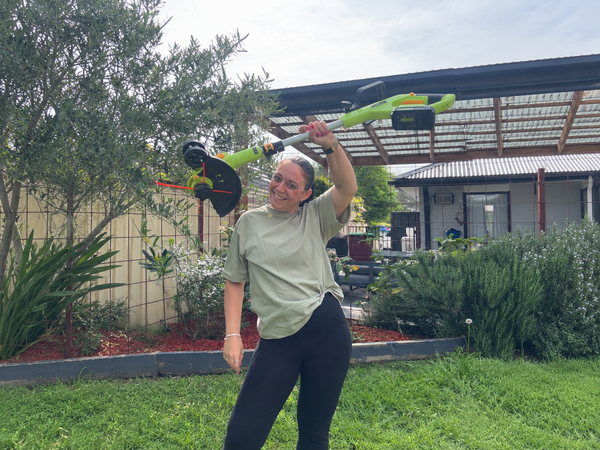
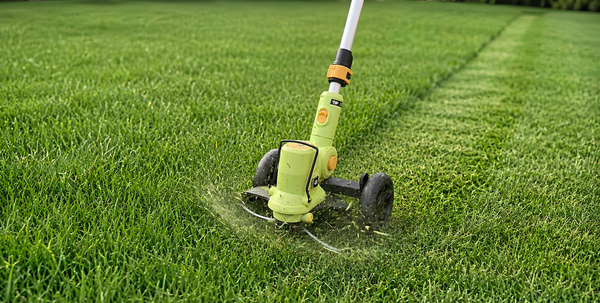
For smaller backyards, you may not need several separate machines to keep the lawn tidy. The Lawno, for example, combines mowing, trimming and edging in one lightweight cordless tool, which makes it easier to tackle several common lawn-care jobs with one piece of equipment.
The Lawno, for example, combines mowing smaller lawn sections, trimming grass around obstacles and edging in one lightweight cordless tool, which makes it easier to tackle several common lawn-care jobs with one piece of equipment. It is particularly suited to homeowners who need a practical solution for smaller outdoor spaces, rather than replacing a full-size mower for larger open lawns. It also helps save space and is comfortable to use: it weighs only 2.3 kgs including the battery and the adjustable rod extends up to 130 cm, so you don’t have to bend down and can work comfortably.
A Trimmer or Whipper Snipper for Hard-to-Reach Areas
A whipper snipper, also known as a grass trimmer or line trimmer, is useful for tidying areas that a mower cannot easily reach. Grass around fences, trees, garden beds, posts and other obstacles can be awkward to cut with a mower. A trimmer gives you more control in these tighter spaces. It can also help tidy up overgrown patches before they become harder to manage.
When choosing a whipper snipper, weight and ease of handling are worth considering alongside power and battery life. A lightweight tool can be easier to carry, manoeuvre and control, particularly when you're working around several areas of the backyard. For smaller gardens, a multi-purpose cordless tool that can also mow and edge may be a practical alternative to storing and maintaining several separate machines.
An Edger for Clean Lawn Borders
A lawn edger helps create a clean border between grass and surfaces such as paths, driveways, paving and garden beds. Edging isn't essential for keeping your lawn healthy, but it can make the whole backyard look tidier and more cared for. It is also a simple way to keep grass from gradually spreading into areas where you don't want it. You can choose a dedicated edger if you regularly maintain large areas of lawn, or opt for a multi-purpose tool if you prefer to keep your gardening equipment to a minimum.
For smaller backyards, a lightweight multi-purpose tool can be useful when edging is one of several routine lawn-care tasks rather than the only job you need equipment for. If you're using a tool that allows you to switch between different lawn-care jobs, it's also worth checking how easy it is to replace the parts you use most often.
Secateurs for Small Branches and Regular Pruning
Secateurs are one of the most useful hand tools for everyday pruning. They are ideal for cutting small branches, stems and dead growth, as well as shaping shrubs and removing damaged or unwanted parts of a plant. Because they are compact and easy to keep within reach, secateurs are useful for quick jobs that don't require a larger tool.
When choosing secateurs, look for a comfortable grip and a design that feels easy to open and close. Good control matters when you're making several cuts, particularly when pruning roses, shrubs or fruit trees. Keeping a pair of secateurs in your gardening toolkit means you can deal with small pruning jobs as they come up rather than letting them build into a bigger task.
Loppers for Thicker Branches
When a branch is too thick for secateurs, loppers provide the extra leverage needed to make the cut. Their longer handles give you more reach and cutting power, making them useful for pruning thicker branches on trees and established shrubs. They can also be helpful when a branch is positioned slightly further into a plant and difficult to reach with a shorter hand tool.
The main thing to consider with loppers is how comfortable they are to hold and operate. Longer handles can provide more leverage, but they can also make the tool heavier and more difficult to manoeuvre. Choose a pair that gives you enough cutting capacity for the branches you typically deal with without making pruning feel unnecessarily tiring.
A Pruning Saw or Mini Chainsaw for Larger Branches
For larger branches that are beyond the capacity of secateurs or loppers, a pruning saw or mini chainsaw can make the job much easier. A pruning saw is a simple manual option for occasional cuts, and a compact cordless chainsaw can be useful when you regularly need to remove thicker branches or deal with more extensive pruning.
For home gardeners who want to handle pruning themselves, a lightweight powered tool can make a physically demanding job feel more manageable. A compact cordless pruning tool can be a practical option for occasional backyard maintenance, particularly when dealing with branches that are too large for hand tools but do not require professional equipment. Choose pruning equipment based on the size of the job you regularly do. Larger trees or extensive pruning work may still require more specialised equipment or professional help.
Hand Trowel for Planting and Small Jobs
A hand trowel is a simple but useful tool for planting, transplanting and working in smaller garden beds. Its narrow blade makes it easier to dig small holes for seedlings, bulbs and flowers without disturbing the surrounding soil. It is also handy for mixing in compost or removing small weeds around established plants.
Look for a trowel with a comfortable, easy-to-grip handle, particularly if you'll be using it for several jobs at once. A sturdy blade is also worth considering if your garden soil is firm or compacted. Because it takes up very little space, a hand trowel is one of those basic tools that's worth keeping close by whenever you're working in the garden.
Garden Fork for Loosening Soil
A garden fork is useful for breaking up and loosening soil, particularly in garden beds where the ground has become compacted. The tines can help improve the soil's structure, work through clumps and mix in compost or other organic matter. A fork can also be useful for lifting out weeds or working around established plants where you want to disturb the soil carefully.
For regular garden work, choose a fork that feels sturdy without being unnecessarily heavy. A comfortable handle and a suitable shaft length can make a noticeable difference when you're working the soil for longer periods. If your garden has heavier or compacted soil, strong metal tines are particularly useful.
Gardening Gloves for Everyday Protection
A good pair of gardening gloves helps protect your hands while you're planting, pruning, weeding and handling soil. They can help keep dirt out from under your nails, reduce the risk of small scratches and protect your hands from rough stems, thorns and other garden debris.
Comfort is just as important as protection when choosing gardening gloves. Look for a pair that fits well and still allows you to move your fingers easily, so you can handle smaller tools and plants without losing control. Breathable materials can also be more comfortable, especially during warmer weather.
Garden Hose or Watering Can
Regular watering is essential for keeping plants, flowers and garden beds healthy, so you'll need a practical way to get water where it's needed. A garden hose is generally the most convenient option for larger backyards and established garden beds. A watering can can be enough for pots, smaller gardens and plants that need more targeted watering.
If you use a hose regularly, look for one that's long enough to reach the areas you need without being difficult to move or store. A watering can should feel comfortable to carry when full, with a handle that gives you good control as you water.
Rake for Leaves and Garden Debris
A rake is a simple way to clear leaves, grass clippings and other garden debris from lawns, paths and garden beds. Regularly clearing fallen leaves can help keep outdoor areas looking tidy and prevent layers of debris from building up, particularly during periods of heavy leaf fall.
For general backyard maintenance, choose a rake that's comfortable to hold and suitable for the area you're clearing. A lightweight rake can be easier to manoeuvre across larger areas. A smaller design may be more practical for garden beds and tighter spaces. It is a basic tool, but one you'll likely reach for regularly throughout the year.
Wheelbarrow or Garden Cart
A wheelbarrow or garden cart can save a lot of effort when you need to move heavier or bulkier items around the backyard. They're useful for transporting soil, compost, mulch, plants, pots and garden waste, particularly if you have a larger garden or regularly take on bigger maintenance jobs.
A traditional wheelbarrow can be a good choice for uneven ground and heavier loads. A garden cart may be easier to use for moving items across flatter areas. When choosing between them, consider the type of jobs you do most often and how comfortable the handle and overall weight feel to you. The right option can make moving materials around the garden much less physically demanding.

How to Choose the Right Gardening Tools for Your Backyard
The best gardening tools are not necessarily the biggest, most powerful or most expensive ones. The right choice depends on your backyard, the type of maintenance you do and how comfortable you are using the tools. Thinking about these factors before buying can help you build a practical collection without filling your shed with equipment you rarely use.
Consider the Size of Your Backyard
The size of your backyard should be one of the first things you consider when choosing gardening tools. A small lawn may not require a full-sized mower or several separate power tools. A larger property may benefit from equipment designed to cover more ground efficiently.
Storage is another consideration. If you have limited shed or garage space, versatile tools that can handle more than one job may be more practical than owning a separate machine for mowing, trimming and edging. For smaller backyards in particular, choosing tools that are easy to store and move around can make regular maintenance simpler.
Think About the Jobs You Actually Do
Before buying a new gardening tool, think about what you actually need it to do. If your main jobs are mowing and tidying lawn edges, focus on equipment that makes those tasks straightforward. If you have mature trees and shrubs, pruning tools may be more important than additional lawn-care equipment.
There is no need to build your toolkit all at once. Start with the tools you use most often, then add others as your garden needs change. A smaller collection of reliable, practical tools can be more useful than a shed full of equipment that only gets used once or twice a year.
Choose Between Cordless and Petrol Gardening Tools
For powered gardening tools, cordless and petrol models each have their advantages. Cordless tools are generally quieter, easier to start and more convenient for everyday home use, without the need to store or refill petrol. They can also be easier to handle when moving around a backyard or working in tighter spaces.
For many homeowners, particularly those maintaining smaller yards, compact gardens or areas around obstacles, lightweight cordless tools are ideal, offering easier handling and convenient storage for regular maintenance. When choosing a cordless tool, also consider battery runtime, charging time and the availability of replacement batteries and chargers.
Petrol tools can be useful for larger or more demanding jobs where longer running times and higher power are important. However, they tend to be heavier and require more maintenance. For many home gardeners, particularly those who value convenience and easy handling, a lightweight cordless tool can be a practical choice for regular garden maintenance.
Look at Weight, Battery Life & Ease of Use
Weight is worth considering whenever you'll be carrying, pushing or manoeuvring a gardening tool around the backyard. A lighter tool can be easier to control and more comfortable to use, particularly when a job takes longer than expected or involves reaching awkward areas. This is especially useful when working around garden beds, fences, pathways and corners where you need more control and flexibility.
Pay attention to the overall design as well. Comfortable handles, straightforward controls and easy storage can make a bigger difference to everyday use than a long list of technical features. The best gardening tool is one that gives you enough power for the job while still feeling manageable and comfortable to use.
Final Thoughts: Choosing Gardening Tools That Work for You
A well-equipped garden doesn't need to mean many tools. The most useful gardening equipment is simply what helps you take care of your backyard comfortably and confidently, whether you're mowing the lawn, pruning a few branches, planting new flowers or keeping garden beds tidy.
When choosing new tools, think about the work you actually want to do and how you want to feel while doing it. Lightweight, easy-to-handle options can make everyday jobs more manageable, while versatile cordless tools can help you get more done without needing a collection of separate machines. With the right tools on hand, keeping your backyard looking its best can be a simple and enjoyable part of looking after your home.