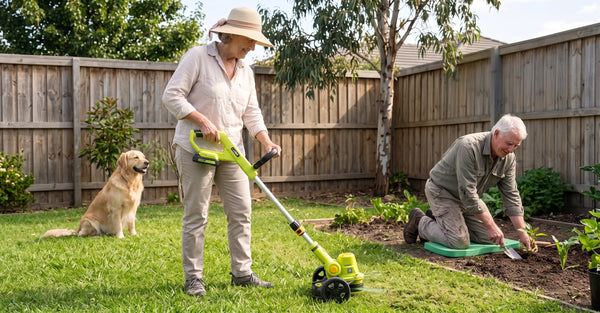
A lawn edger creates a clean, defined boundary between grass and surfaces such as paths, driveways and garden beds. The right edger depends on the size of your lawn, the type of borders you maintain and how often you need to edge.
A dedicated edger can be useful if creating clean lawn borders is a regular job, while a compact multi-purpose tool can make more sense for smaller yards where edging is only one of several lawn-care tasks. Weight, cutting depth, blade design, manoeuvrability and power are all worth considering before you choose, especially if you want to keep regular lawn maintenance quick and manageable.

What to Look for in a Lawn Edger
Choosing an edger is not simply about finding the biggest blade or most powerful motor. The best option depends on the type of edges around your property, how much maintenance they need and how comfortable the tool is to use.
Cutting System
The cutting system affects how cleanly an edger can cut through grass and soil. Dedicated edgers commonly use a solid metal blade designed to create a defined cut, while multi-purpose lawn tools may use a different system that allows the same tool to perform several functions.
Look at the blade design, size and replacement process as well as the cutting performance. A system that is easy to replace and maintain can make the tool more convenient to use over time. For example, The Lawno uses flexible blades rather than a traditional metal edging blade, allowing the same cutting system to be used across its different lawn-care functions.
Ease of Control and Manoeuvrability
A good edger should be easy to guide along the line you want to create. Weight, balance, handle position and a guide wheel can all affect how easy it is to maintain a consistent edge.
This becomes particularly important around curves, garden beds and uneven sections. A tool that is comfortable to hold and manoeuvre can make it easier to work slowly and make small adjustments rather than correcting an uneven edge afterwards.
Cutting Depth and Adjustability
Cutting depth matters when you are restoring an established edge or creating a new border. An adjustable depth setting allows you to make a shallower cut for routine maintenance or increase the depth when more grass needs to be removed.
Don’t assume that deeper is always better. Cutting further into the soil than necessary can widen the border and create extra work. For an established lawn edge, the aim is generally to follow the existing boundary and remove only the growth or material that has moved beyond it.
Battery Life and Power
Cordless edgers are convenient for residential gardens because you can move around the yard without a power cable or petrol. Battery runtime matters more if you have a large number of borders to maintain or regularly complete longer edging sessions.
Petrol models can still make sense for larger properties or demanding jobs where extended running time and power are priorities. For a smaller backyard, however, cordless equipment can be convenient when you want something easy to start and relatively simple to maintain.
Storage and Maintenance
Think about where the edger will live when you are not using it. Compact designs, folding handles and split shafts can be useful if your shed or garage has limited space.
Maintenance is worth considering as well. Keep the cutting system clean, check blades for wear and replace damaged components when necessary. If you use a cordless tool, check whether replacement batteries and other parts are readily available before buying.
Type of Edger: Dedicated vs. Multi-Purpose Lawn Tool
Dedicated lawn edgers are designed specifically for creating defined borders. They are a good choice if you have a lot of edging to do or want a consistent finish along paths, driveways and garden beds. Many use a guide wheel to keep the blade at a consistent position as you move along the edge.
A multi-purpose lawn tool takes a different approach by combining edging with other lawn-care functions. This can be useful for smaller lawns, compact spaces or homeowners with limited storage. Rather than replacing specialised equipment for larger properties, a multi-purpose tool can be a practical option when you also need to mow smaller lawn areas and trim grass around obstacles.

How to Edge a Lawn for a Clean Finish
Once you have the right tool, creating a clean lawn edge is mainly about following a clear boundary and keeping your movements controlled. Taking a little time to set up the edge before you start can make the finished result more consistent.
Choose and Mark the Edge
Before you start, decide where the lawn should meet the surrounding surface. An existing path, driveway, garden bed or retaining edge can provide a useful guide.
If there is no established border, mark the line before cutting. A string line can help create a straight boundary, while curved garden beds are usually easier to follow by working with their existing shape.
Set the Cutting Depth
The depth you need depends on whether you are maintaining an existing border or restoring one that has become overgrown. For routine maintenance, you may only need to remove grass that has spread beyond the existing line.
If the edge is heavily overgrown, bring it back gradually rather than removing a large amount of soil in one pass. Cutting deeper than necessary can widen the border and create extra work. In this situation, a practical approach is to trim the grass first, mow it afterwards, and edge last.
Clear the Area
Remove sticks, stones, fallen branches and other loose objects before you begin. This gives you a clear view of the border and reduces the chance of debris interfering with the cutting system or being thrown while the tool is operating.
Clearing the area also makes it easier to see the boundary around garden beds, where mulch, loose soil and plants can make the edge harder to follow.
Follow the Border Slowly
If the lawn already has a defined edge, use it as your guide. Keep the cutting system aligned with the boundary between the grass and the path, driveway or garden bed.
Move steadily along the line rather than trying to finish as quickly as possible. For longer sections, work in manageable stretches and check your progress regularly to make sure the edge stays consistent. When working around curves or uneven sections, follow the natural shape of the garden rather than forcing the line to be perfectly straight.
Clean Up and Check the Finish
Once you have finished, remove grass clippings and loose soil left along the edge. A rake, broom or leaf blower can help clear the area and reveal the finished border.
Take a quick look along the entire edge and make any small corrections while the tool is still out. Regular touch-ups can then help prevent the border from becoming heavily overgrown and make future edging quicker.
8 Lawn Edgers That Give You a Clean-Cut Finish
There is no single edging tool that suits every garden. A homeowner with a small backyard may have very different requirements from someone maintaining hundreds of metres of lawn borders. The following are examples of dedicated lawn edgers and multi-purpose lawn tools available in Australia, covering different approaches to lawn edging.
1. The Lawno – Gardeners Crate
Best for: Smaller lawns and multi-purpose lawn maintenance
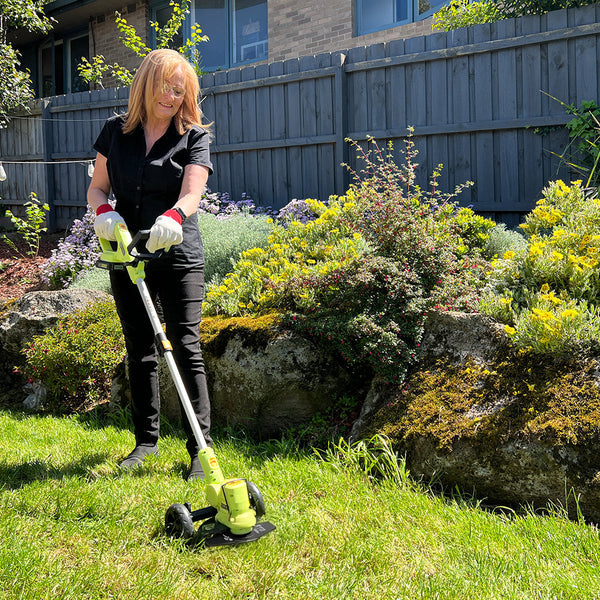
The Lawno is a lightweight 3-in-1 lawn tool designed for smaller outdoor spaces. It combines mowing smaller lawn areas, trimming grass around obstacles and edging. It’s a useful tool when several routine lawn-care tasks need to be handled with one compact tool.
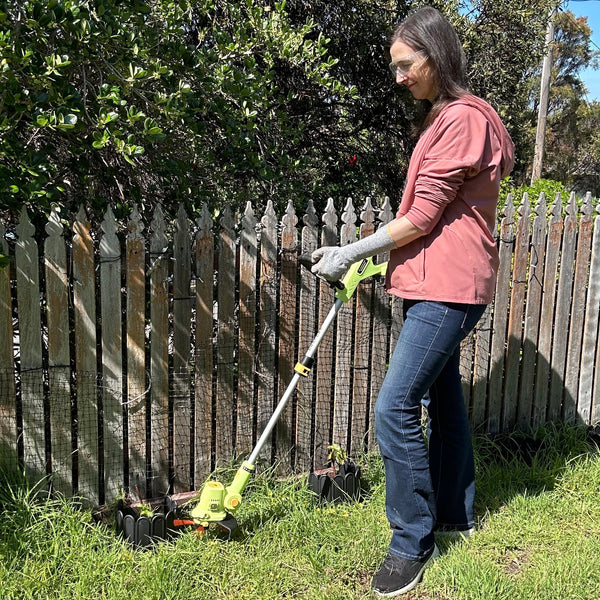
For edging, The Lawno uses its dedicated edging wheel and works sideways along the lawn border, helping you follow paths, driveways and garden beds. It weighs 2.3 kg with the battery and has an adjustable rod and second handle to support different working positions. The Lawno comes as a kit: it includes the tool itself, battery, dual dock fast charger, flexible blades, and blade spanner.
2. RYOBI 18V ONE+ 220mm Grass Edger 4Ah Kit
Best for: Cordless edging with adjustable depth
The RYOBI 18V ONE+ 220mm Grass Edger is a dedicated cordless edger with a 220 mm metal blade and four cutting-depth settings. A guide wheel helps keep the tool steady along the lawn border, making it suitable for maintaining edges around paths, driveways and garden beds.
The kit includes a 4Ah battery and charger, while RYOBI's ONE+ system allows the battery to be used with other compatible tools. RYOBI also offers a brushless 204 mm edger with a deeper adjustable cutting range for more demanding edging jobs.
3. Ozito PXC 18V Lawn Edger
Best for: Compact cordless edging
The Ozito PXC 18V Lawn Edger is a dedicated cordless edger designed for maintaining borders along driveways, footpaths, trees and flower beds. Its 190 mm dual-cut blade has three adjustable cutting-depth settings.
The split-shaft design allows the tool to be separated for easier transport and storage. The skin version is supplied without a battery, so it is best suited to homeowners who already use or plan to use the Ozito PXC battery system.
4. Victa 2-Stroke Edger
Best for: Traditional petrol edging
The Victa 2-Stroke Edger is a dedicated petrol model designed for maintaining defined lawn borders. It uses a 25.4cc two-stroke engine and a 228 mm cutting blade, with five height settings for adjusting the cutting position.
Its three-wheel design and large rear wheel are intended to help with manoeuvrability, while the fold-down handles make storage more convenient. At 12.7 kg dry, it is considerably heavier than the cordless options in this list.
5. EGO 56V POWER+ Commercial Straight Shaft Edger
Best for: Higher-power cordless edging
The EGO Commercial Straight Shaft Edger is a dedicated cordless edger with a 200 mm blade, adjustable guide wheel and variable cutting depth. It is designed for more demanding edging jobs where additional power and cutting depth are useful.
The tool uses EGO's 56V battery system, with the battery sold separately. It also has a carbon-fibre shaft and adjustable speed control for greater control while working along lawn borders.
6. Makita 40V Max XGT Brushless Edger UE001G
Best for: High-power cordless edging
The Makita UE001G is a dedicated 40V Max XGT cordless edger designed for heavier-duty lawn edging. Its brushless motor and adjustable cutting depth make it suitable for maintaining established borders and tackling areas that need a more substantial cut.
The tool is supplied without a battery or charger, so it is most practical for homeowners who already use compatible Makita XGT equipment.
7. Milwaukee M18 FUEL Fixed Shaft Edger
Best for: Heavy-duty cordless edging
The Milwaukee M18 FUEL Fixed Shaft Edger is designed for landscape maintenance and features an adjustable wheel for setting the cutting depth and tool angle. Its variable-speed trigger allows the cutting speed to be adjusted while working.
The tool is supplied without a battery or charger and is part of Milwaukee's M18 system. Its fixed shaft and adjustable wheel are designed to provide controlled edging along established lawn borders.
8. Cyclone Half Moon Edger
Best for: Simple manual edging
The Cyclone Half Moon Edger is a manual option for maintaining lawn borders without a battery, fuel or motor. It uses a serrated steel blade with a T-handle and non-slip foot tread to help when cutting into the edge of the turf.
Manual edging can be useful for smaller sections and occasional maintenance, although it requires more physical effort than powered alternatives. Cyclone also offers other manual edgers.
Final Thoughts: Choosing the Right Lawn Edger for Your Yard
A clean lawn edge comes down to more than the tool itself. Following the existing boundary, working at a consistent depth and keeping up with regular maintenance will have a big impact on the finished result.
For larger lawns with extensive borders, a dedicated edger can make sense because it is designed specifically for the job. For smaller yards where edging is only one of several routine tasks, a compact multi-purpose tool can be more practical.
The important thing is to match the equipment to your lawn. A heavier, high-powered edger may be unnecessary for a few metres of garden border, while a lightweight tool may not be the right choice for extensive professional edging work.